
Ladakh Travel Guide 2026: Everything You Need to Know Before You Go
Planning a Leh Ladakh trip in 2026? You’re in the right place. This complete Ladakh travel guide 2026 covers everything — best time to visit Ladakh, how to reach, top places to see, a day-by-day itinerary, budget breakdown, packing list, and travel tips that most blogs forget to tell you.
Whether you’re a solo traveler, a couple on a romantic escape, or a group chasing the ultimate Ladakh bike trip, this guide is your one-stop resource for an unforgettable journey.
Table of Contents
- Why Ladakh in 2026?
- Best Time to Visit Ladakh
- How to Reach Ladakh
- Top Places to Visit in Ladakh
- Ladakh Itinerary — 7 Days & 10 Days
- Ladakh Budget Breakdown 2026
- Ladakh Bike Trip Guide
- Permits You Need
- Packing List for Ladakh
- Travel Tips for Ladakh
- Where to Stay in Ladakh
- What to Eat in Ladakh
- FAQs About Ladakh Travel
- Plan Your Trip With Margdarshi Travels
1. Why Visit Ladakh in 2026? {#why-ladakh}
Ladakh is not just a destination. It’s a feeling.
Imagine waking up at 11,000 feet above sea level, with snow-capped peaks surrounding you, a monastery bell echoing in the crisp morning air, and a turquoise lake stretching as far as your eyes can see. That’s Ladakh — and no photograph ever does it full justice.
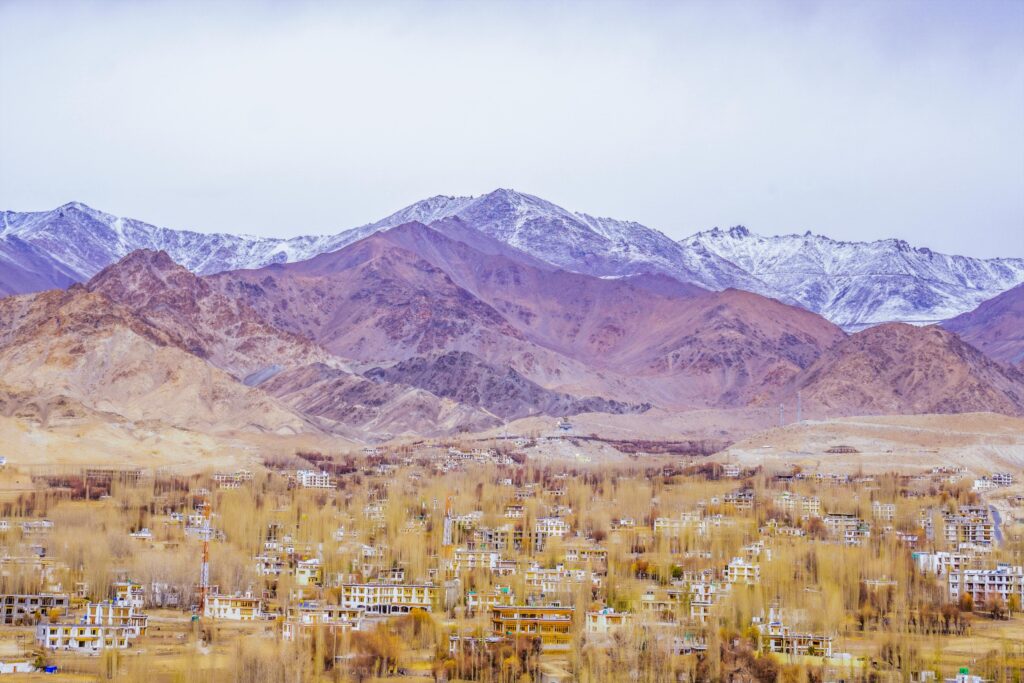
In 2026, Ladakh tourism is booming yet still raw. The government has made significant upgrades to roads, homestays, and eco-tourism infrastructure since it became a Union Territory. New routes have opened up, connectivity has improved, and yet the landscape remains one of the most untouched in the world.
Here’s why Ladakh should be at the top of your 2026 travel list:
- India’s highest motorable passes, including Khardung La and Chang La
- Pristine lakes like Pangong Tso and Tso Moriri that look unreal in daylight
- A living Tibetan Buddhist culture found nowhere else in India
- Some of the cleanest skies in Asia — perfect for stargazing
- Roads that challenge and reward bikers, cyclists, and road trippers equally
- Fewer crowds than Goa or Shimla, more soul than most places combined
2. Best Time to Visit Ladakh {#best-time}
One of the most common questions is: when is the best time to go to Ladakh? The honest answer is — it depends on what kind of experience you want.
Season-by-Season Breakdown
| Season | Months | Temperature | Road Access | Ideal For |
|---|---|---|---|---|
| Summer | June – August | 15°C to 25°C (day) | All roads open | First-timers, families, bike trips |
| Shoulder | May & September | 5°C to 18°C | Most roads open | Budget travelers, fewer crowds |
| Autumn | October | -2°C to 12°C | Manali–Leh may close | Photography, monastery festivals |
| Winter | Nov – March | -15°C to -35°C | Only Leh by air | Chadar Trek, extreme adventurers |
| Spring | April | 0°C to 10°C | Srinagar–Leh opening | Off-season peace, budget deals |
The Verdict
June to September is the best time to visit Ladakh for most travelers. The weather is pleasant, all major passes and routes are open, and every tourist attraction is fully accessible. July and August see the highest footfall — book accommodations at least 6–8 weeks in advance during this period.
If you want a quieter experience with equally stunning views, May and early October are hidden gems. Temperatures are cooler but manageable, and hotel rates are 20–30% cheaper.
Pro tip: The Hemis Festival, one of Ladakh’s most celebrated Buddhist festivals, falls in June or July (depending on the Tibetan lunar calendar). Plan around it for a cultural experience unlike any other.
3. How to Reach Ladakh {#how-to-reach}
There are three ways to reach Leh Ladakh, and each has its own charm and challenge.
By Air ✈️
The fastest and most convenient option. Leh’s Kushok Bakula Rimpochee Airport is well connected to Delhi, Mumbai, and other major cities. Flight time from Delhi is about 1 hour 15 minutes.
- Tip: Book early — flights to Leh sell out months in advance during peak season
- Important: Upon landing, rest for the first 24–48 hours. Altitude sickness is real, and acclimatization is non-negotiable
- Average fare (Delhi–Leh): ₹4,000–₹12,000 one way (book 2–3 months ahead for best prices)
By Road — Manali–Leh Highway 🚗
One of the most epic road journeys in the world. The Manali–Leh Highway (NH-3) covers about 475 km and takes 2 days (with an overnight halt at Jispa or Sarchu). This route is open from late May/early June to mid-October.
Key passes on this route:
- Rohtang Pass (3,978 m) — requires permit
- Baralacha La (4,892 m)
- Tanglang La (5,328 m) — one of the world’s highest motorable passes
By Road — Srinagar–Leh Highway 🏔️
A slightly longer but incredibly scenic alternative (434 km, 2 days). Passes through Zoji La, Drass, and Kargil. Open from May onwards. This is the preferred route if you’re coming from Kashmir and want to combine both trips.
Summary Table
| Route | Distance | Duration | Open Months | Best For |
|---|---|---|---|---|
| By Air | — | ~1.5 hours | Year-round | Quick trips, senior travelers |
| Manali–Leh Highway | ~475 km | 2 days | June–October | Bikers, road trippers |
| Srinagar–Leh Highway | ~434 km | 2 days | May–October | Scenic drives, Kashmir combo |
4. Top Places to Visit in Ladakh {#top-places}
Pangong Lake 🏔️
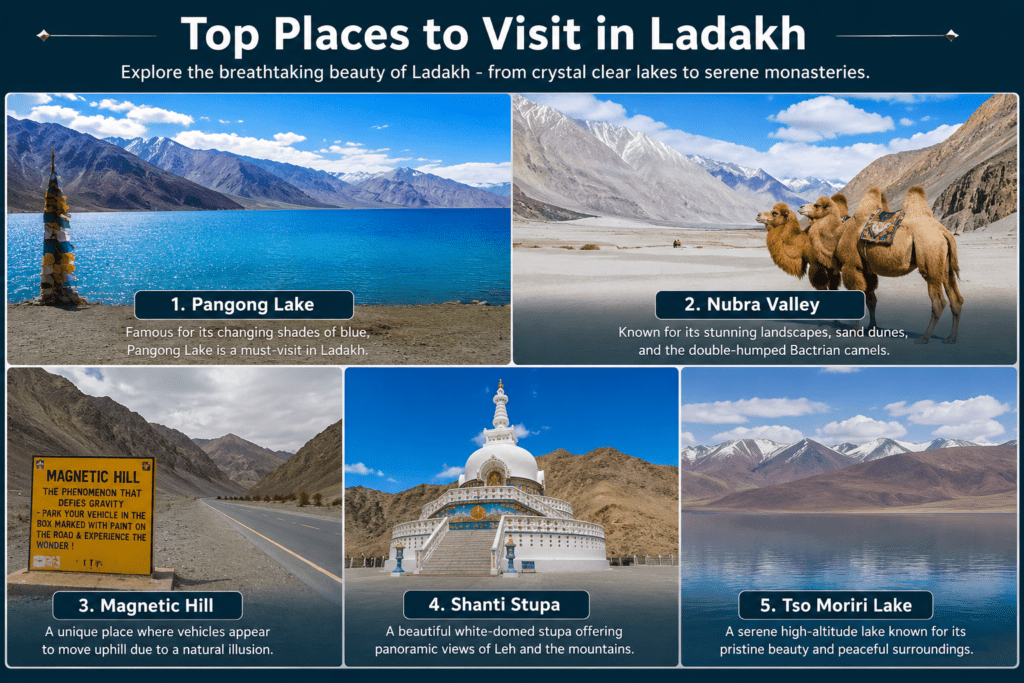
Arguably the most iconic image in Indian travel photography. Pangong Tso stretches 134 km — about 60% of it in Tibet. At 4,350 metres, the lake changes colour through the day, going from a deep sapphire blue to turquoise to green. After the 3 Idiots filming, it became a cultural landmark too.
Don’t miss: Sunrise at Pangong. Set your alarm for 5 AM — the light is extraordinary.
Permit required: Yes (Inner Line Permit)
Distance from Leh: ~160 km (5–6 hours drive)
Nubra Valley 🐪
A surreal high-altitude cold desert valley, sandwiched between the Karakoram and Ladakh ranges. The Bactrian (double-humped) camels at the Hunder sand dunes are one of the most unique sights in India. Diskit Monastery, perched on a hilltop, offers sweeping views of the valley below.
Don’t miss: Camel safari on the sand dunes at sunset.
Permit required: Yes (ILP via Khardung La — one of the world’s highest motorable passes at 5,359 m)
Distance from Leh: ~140 km (4–5 hours)
Magnetic Hill
A quirky optical illusion stretch of road near Leh where vehicles appear to be rolling uphill against gravity. It takes all of 20 minutes to visit but it’s a guaranteed conversation starter. Located on the Leh–Kargil highway at 14,000 feet.
Shanti Stupa
A white-domed Buddhist stupa built in 1991 on a hill in Changspa, overlooking Leh town. The view from the top — especially at dusk — is one of those moments that stays with you.
Best time to visit: Sunrise or sunset for golden-hour photography.
Tso Moriri Lake
Less crowded than Pangong and arguably more beautiful in its raw solitude. Located at 4,522 metres in the Changthang Plateau, Tso Moriri is a Ramsar-designated wetland and a haven for migratory birds including bar-headed geese and black-necked cranes.
Best for: Solitude seekers and wildlife photographers.
Distance from Leh: ~240 km
Hemis Monastery
The largest and wealthiest monastery in Ladakh, about 45 km from Leh. Home to a rare thangka painting that is only displayed every 12 years (next display: 2028). The Hemis Festival here is a must-attend event.
Khardung La Pass
At approximately 5,359 metres, Khardung La is one of the highest motorable passes in the world and a bucket-list checkpoint for bikers. The ride up is breathtaking — quite literally.
Zanskar Valley
A remote, dramatic gorge cut by the Zanskar River. In winter, the frozen river becomes the legendary Chadar Trek, one of the most extreme and mystical treks in the world. In summer, the valley is accessible by road and offers some of Ladakh’s least-visited landscapes.
5. Ladakh Itinerary {#itinerary}
7-Day Ladakh Itinerary (Leh Arrival by Flight)
| Day | Route & Activities |
|---|---|
| Day 1 | Arrive Leh by flight. Check in. Rest. Acclimatization is mandatory — no sightseeing. Stay hydrated. |
| Day 2 | Leh local sightseeing — Leh Palace, Shanti Stupa, Magnetic Hill, Hall of Fame Museum, Gurudwara Pathar Sahib |
| Day 3 | Leh → Nubra Valley via Khardung La (5,359 m). Camel safari at Hunder sand dunes. Night stay at Nubra |
| Day 4 | Nubra Valley sightseeing — Diskit Monastery, Hunder village. Evening leisure. Night stay Nubra |
| Day 5 | Nubra → Pangong Lake via Shyok River valley. Sunset at Pangong. Overnight stay at Pangong |
| Day 6 | Sunrise at Pangong. Return to Leh via Chang La pass. Evening free for shopping (pashmina, local handicrafts) |
| Day 7 | Departure from Leh |
10-Day Ladakh Itinerary (With Tso Moriri & Manali Route)
| Day | Route & Activities |
|---|---|
| Day 1 | Arrive Leh by flight. Rest, acclimatize |
| Day 2 | Leh local sightseeing |
| Day 3 | Leh → Nubra Valley via Khardung La |
| Day 4 | Nubra Valley — Diskit, Hunder dunes, camel safari |
| Day 5 | Nubra → Pangong Lake |
| Day 6 | Pangong — Sunrise, lakeside walk, relax |
| Day 7 | Pangong → Tso Moriri (via Chushul) — Remote, stunning route |
| Day 8 | Tso Moriri — Explore, birdwatching, monastery visit. Return to Leh |
| Day 9 | Leh → Sarchu (via Manali–Leh highway) |
| Day 10 | Sarchu → Manali. End of trip |
6. Ladakh Budget Breakdown 2026 {#budget}
Budget Traveler (₹25,000–₹35,000 per person for 7 nights)
| Expense | Estimated Cost |
|---|---|
| Flights (Delhi–Leh–Delhi) | ₹8,000–₹12,000 |
| Accommodation (7 nights, guesthouses) | ₹4,500–₹7,000 |
| Local transport (shared cabs / bike rental) | ₹4,000–₹6,000 |
| Food (3 meals/day) | ₹3,000–₹4,500 |
| Permits (ILP for Pangong + Nubra) | ₹400–₹600 |
| Miscellaneous (tips, entry fees, shopping) | ₹2,000–₹3,000 |
| Total | ~₹25,000–₹35,000 |
Mid-Range Traveler (₹40,000–₹55,000 per person for 7 nights)
| Expense | Estimated Cost |
|---|---|
| Flights | ₹10,000–₹15,000 |
| Accommodation (mid-range hotels) | ₹9,000–₹14,000 |
| Private cab for all sightseeing | ₹10,000–₹14,000 |
| Food | ₹5,000–₹7,000 |
| Permits + activities | ₹2,000–₹3,000 |
| Shopping | ₹3,000–₹5,000 |
| Total | ~₹40,000–₹55,000 |
Premium / Comfort Traveler (₹65,000+ per person for 7 nights)
Luxury camps at Pangong, premium hotels in Leh, private vehicle throughout, guided tours, and curated experiences can take the budget to ₹80,000–₹1,20,000 per person.
💡 Pro Tip: Booking through a travel partner like Margdarshi Travels saves you 15–25% vs booking everything separately, plus you get expert local guidance included.
7. Ladakh Bike Trip Guide {#bike-trip}
The Ladakh bike trip is a rite of passage for riders across India. There’s nothing quite like the feeling of throttling up a mountain pass at 5,000 metres with cold wind in your face and nothing but Himalayan peaks ahead.
Popular Bike Routes
Route 1: Delhi → Manali → Leh → Delhi
Distance: ~2,700 km | Duration: 10–14 days | Best for: Classic grand tour
Route 2: Delhi → Srinagar → Leh → Manali → Delhi
Distance: ~3,100 km | Duration: 12–16 days | Best for: Comprehensive Himalayan circuit
Route 3: Leh Local Circuit (for those flying in)
Covers: Khardung La, Nubra, Pangong, Chang La, Tso Moriri
Duration: 7–9 days | Best for: Riders who want to fly to Leh and ride locally
Recommended Bikes
- Royal Enfield Himalayan — Most popular, reliable at altitude
- RE Classic 350 / Meteor 350 — Comfortable for long-distance
- Hero Xpulse 200 4V — Great for mixed terrain
- KTM Duke 390 / Adventure — Sporty performance option
Key Bike Trip Tips
- Service your bike completely 2–3 weeks before departure
- Carry a puncture kit, basic toolkit, and spare clutch/accelerator cables
- Never ride alone — always travel in a group of at least 2
- Keep fuel tanks full — petrol pumps are sparse beyond Leh (Pang has none)
- Ride slow at altitude — both you and your engine need oxygen
- Do not ride at night on mountain highways
- Get comprehensive bike insurance before starting
8. Permits Required for Ladakh {#permits}
As of 2026, foreign nationals and Indian citizens require different sets of permits. Here’s a clear breakdown:
For Indian Nationals
| Area | Permit Type | Cost (approx.) | Where to Get |
|---|---|---|---|
| Nubra Valley | Inner Line Permit (ILP) | ₹50–₹100 | Leh DC Office or online |
| Pangong Lake | Inner Line Permit (ILP) | ₹50–₹100 | Leh DC Office or online |
| Tso Moriri | Inner Line Permit (ILP) | ₹50–₹100 | Leh DC Office or online |
| Dah-Hanu | Restricted Area Permit | ₹100 | DC Office |
ILPs for Indian nationals can now be obtained online through the Leh district website. Most tour operators (including Margdarshi Travels) arrange permits as part of the package.
For Foreign Nationals
Foreign tourists need a Protected Area Permit (PAP) for restricted zones and must travel in a minimum group of 2, accompanied by a registered Indian tour operator.
9. Packing List for Ladakh {#packing}
Ladakh’s weather is unpredictable and the altitude demands specific gear. Pack smart, not heavy.
Clothing
- [ ] 2–3 thermal inner layers (top and bottom)
- [ ] 1 good quality down jacket or fleece
- [ ] Windproof outer jacket
- [ ] 3–4 regular T-shirts or shirts
- [ ] 1–2 pairs of trekking pants
- [ ] Warm socks (4–5 pairs), thermal socks for night
- [ ] Gloves and woollen cap
- [ ] Sunglasses (UV400 or polarized — UV is intense at altitude)
- [ ] Comfortable trekking shoes with ankle support
- [ ] Sandals for camp/town use
Health & Safety
- [ ] Diamox (acetazolamide) for AMS — consult doctor before taking
- [ ] Personal first aid kit
- [ ] ORS sachets
- [ ] Lip balm (SPF) and sunscreen (SPF 50+)
- [ ] Moisturizer — skin dries out fast at altitude
- [ ] Personal medicines + extra supply
- [ ] Hand sanitizer and face masks
Gear & Tech
- [ ] Power bank (10,000 mAh+)
- [ ] Universal travel adapter
- [ ] Offline maps downloaded (Google Maps or Maps.me)
- [ ] Headlamp with extra batteries
- [ ] Reusable water bottle (at least 1 litre)
- [ ] Dry bags for camera gear
- [ ] Cash (ATMs in Leh work but are scarce in remote areas)
10. Travel Tips for Ladakh {#travel-tips}
These are the tips that make the difference between a stressful trip and a life-changing one.
Before You Go
- Book flights 2–3 months in advance. Leh flights are among the most competitive routes in India during peak season.
- Get a fitness check. If you have heart conditions, hypertension, or respiratory issues, consult a doctor before planning a Ladakh trip.
- Download offline maps. Mobile data is patchy beyond Leh town.
Altitude Sickness (AMS) — The Most Important Thing
Acute Mountain Sickness (AMS) affects many first-time visitors to Ladakh. It is not about fitness — it happens to athletes too.
Symptoms: Headache, nausea, dizziness, fatigue, shortness of breath
Prevention:
- Rest for the first 24–48 hours after arrival. Seriously — no sightseeing on Day 1.
- Stay well hydrated (3–4 litres of water daily)
- Avoid alcohol and heavy meals for the first 2 days
- Eat light — momos, thukpa, dal-rice are perfect
- If symptoms are severe, descend immediately — altitude is not worth your health
While in Ladakh
- Carry enough cash. ATMs in Leh work intermittently; beyond Leh, don’t count on them at all.
- Respect local culture. Always ask before photographing monks or locals. Remove shoes before entering monasteries.
- Don’t litter. Ladakh is a fragile ecosystem. The locals take enormous pride in keeping it clean — so should visitors.
- Inform someone of your daily route, especially if exploring remote areas.
- Carry extra fuel if biking or driving to remote areas like Tso Moriri or Hanle.
- Night temperatures drop sharply — even in July, it can get below 5°C. Always carry warm layers regardless of daytime temperature.
11. Where to Stay in Ladakh {#stay}
In Leh Town
- Budget: Zostel Leh, Hotel Yak Tail, guesthouses in Changspa area — ₹800–₹1,800/night
- Mid-range: Hotel Grand Willow, Hotel Zen Ladakh — ₹2,500–₹5,000/night
- Premium: The Grand Dragon Ladakh, Chamba Camp — ₹8,000–₹20,000/night
At Pangong Lake
- Camps (most popular): Temporary luxury tented camps along the southern shore near Spangmik. Run from May–October. Expect to pay ₹2,500–₹6,000 per night (meals usually included).
- Basic guesthouses are available in Lukung and Spangmik villages.
In Nubra Valley
- Hunder: Glamping campsites and eco-lodges — ₹2,000–₹6,000/night
- Diskit: Budget guesthouses — ₹900–₹2,000/night
Pro Tip
Book accommodation at Pangong at least 6–8 weeks ahead during July–August. It’s one of the most in-demand overnight stays in all of India.
12. What to Eat in Ladakh {#food}
Ladakhi cuisine is simple, warming, and deeply satisfying — perfect for the cold climate and high altitude.
Must-Try Local Dishes
- Thukpa — Hearty noodle soup with vegetables or meat; perfect after a long day of travel
- Momos — Steamed dumplings (veg or meat); found everywhere in Leh
- Skyu — Traditional Ladakhi stew with root vegetables and handmade pasta-like dough
- Tsampa — Roasted barley flour, eaten mixed with butter tea; a staple for locals
- Butter Tea (Po Cha) — Salty, made with yak butter; an acquired taste but great for altitude
- Chang — Local barley beer; mild and refreshing but avoid excess at altitude
- Apricot jam — Ladakh is famous for its apricots; try fresh ones in season
Where to Eat in Leh
Leh’s main bazaar and Changspa area have a great selection of cafés and restaurants. Highly recommended:
- The Tibetan Kitchen — Best momos in Leh
- Bon Appétit — Indian, continental, and Ladakhi options
- Lamayuru Restaurant — Authentic local food in a warm setting
13. FAQs About Ladakh Travel {#faqs}
Q1. Is Ladakh safe for solo female travelers?
Yes, Ladakh is one of the safest destinations in India for solo female travelers. The local population is warm, respectful, and tourism-friendly. As with any destination, take standard precautions — inform someone of your itinerary and avoid isolated areas after dark.
Q2. Do I need a permit to visit Ladakh as an Indian citizen?
You do not need a permit to visit Leh city itself. However, you will need an Inner Line Permit (ILP) to visit Pangong Lake, Nubra Valley, Tso Moriri, and other restricted areas near the border. These can be obtained easily online or at the Leh DC office, and most tour operators handle this for you.
Q3. Is it possible to do Ladakh in 5 days?
Technically yes, but not recommended. With 2 mandatory acclimatization days factored in, you’d only have 3 days of sightseeing — barely enough to cover Leh locally. A minimum of 7 days is ideal; 9–10 days allows you to cover the best of Ladakh without rushing.
Q4. Can I visit Ladakh in winter?
Yes, but it’s for experienced adventurers only. Temperatures plunge to -30°C or below, most roads are closed, and accommodation options are very limited. The famous Chadar Trek (walking on the frozen Zanskar River) happens in January–February and is a bucket-list experience for trekkers.
Q5. What is the altitude of Leh and Ladakh?
- Leh city: 3,524 metres (11,562 ft)
- Pangong Lake: 4,350 metres (14,270 ft)
- Nubra Valley: 3,048 metres (10,000 ft)
- Khardung La Pass: 5,359 metres (17,582 ft)
Q6. How much cash should I carry to Ladakh?
Carry at least ₹8,000–₹10,000 in cash beyond Leh. ATMs in Leh work but are often out of service; in remote areas like Nubra, Pangong, or Tso Moriri, there are no ATMs at all. UPI may work in some homestays and camps but don’t rely on it.
Q7. Is mobile network available in Ladakh?
BSNL has the best network coverage in Ladakh, including some remote areas. Jio and Airtel work well in Leh and along major highways but connectivity drops significantly beyond town. Download offline maps before you leave Leh each morning.
Q8. What are the best things to buy in Ladakh?
- Pashmina shawls and stoles (buy from government emporiums to avoid fakes)
- Thangka paintings
- Turquoise and silver jewellery
- Dried apricots and apricot oil
- Ladakhi handicrafts and prayer flags
Q9. Is Ladakh good for families with children?
Yes, but with preparation. Children and elderly travelers can face AMS. Speak with a pediatrician before the trip. Leh itself is gentle enough; avoid high-altitude passes (Khardung La, Chang La) with very young children unless medically advised. Many families successfully do Leh + Nubra + Pangong and have a wonderful experience.
Q10. What is the best way to book a Ladakh trip package?
Booking through a reputable travel agency with Ladakh expertise is the smartest option. They handle permits, transport, accommodation, meals, and emergencies — giving you peace of mind so you can focus entirely on the experience.
14. Plan Your Ladakh Trip With Margdarshi Travels {#cta}
Ready to experience the magic of Ladakh in 2026?
At Margdarshi Travels, we’ve been crafting unforgettable Ladakh journeys for travelers from across India. We know every pass, every camp, every sunrise viewpoint — and we put that knowledge to work for you.
What We Offer for Ladakh 2026
- ✅ Customized Ladakh tour packages — 7 nights, 10 nights, and beyond
- ✅ Leh Ladakh bike trip packages with guided convoy support
- ✅ Pangong & Nubra overnight packages with premium camp stays
- ✅ Complete permit handling — we manage all ILPs for you
- ✅ Airport pickup, private vehicles, experienced drivers
- ✅ 24×7 on-trip support — we’re just a call away throughout your journey
- ✅ PAN India service — travel from anywhere in India
Our Promise
We don’t just book travel. We design experiences. Every itinerary we create is tailored to your pace, your interests, and your budget. Whether you want adventure or relaxation, a group trip or a private escape — Margdarshi Travels makes it happen seamlessly.
📞 Contact Us Today
| Channel | Details |
|---|---|
| Phone / WhatsApp | +91 92176 86516 |
| Phone | +91 8130184850 |
| info@margdarshi.com | |
| margdarshitravels@gmail.com | |
| Location | Sector 34, Noida |
| @margdarshitravels | |
| @margdarshitravels | |
| Chat with us |
“Your journey to Ladakh begins with a single call. Let Margdarshi Travels take care of everything else.”
Final Word
Ladakh in 2026 is a once-in-a-lifetime experience waiting to happen. The mountains are timeless. The lakes are otherworldly. The culture is humbling. And the roads — they will test you and transform you in equal measure.
Go. But go prepared. Use this Ladakh travel guide 2026 as your compass, and don’t hesitate to lean on a trusted travel partner to make the journey as smooth as it is spectacular.
Safe travels. Ladakh is waiting. 🏔️
Tags: Ladakh travel guide 2026, leh ladakh trip, best time to visit Ladakh, Pangong lake, Nubra valley, Ladakh bike trip, Ladakh itinerary, Ladakh budget, Ladakh permit, Margdarshi Travels